


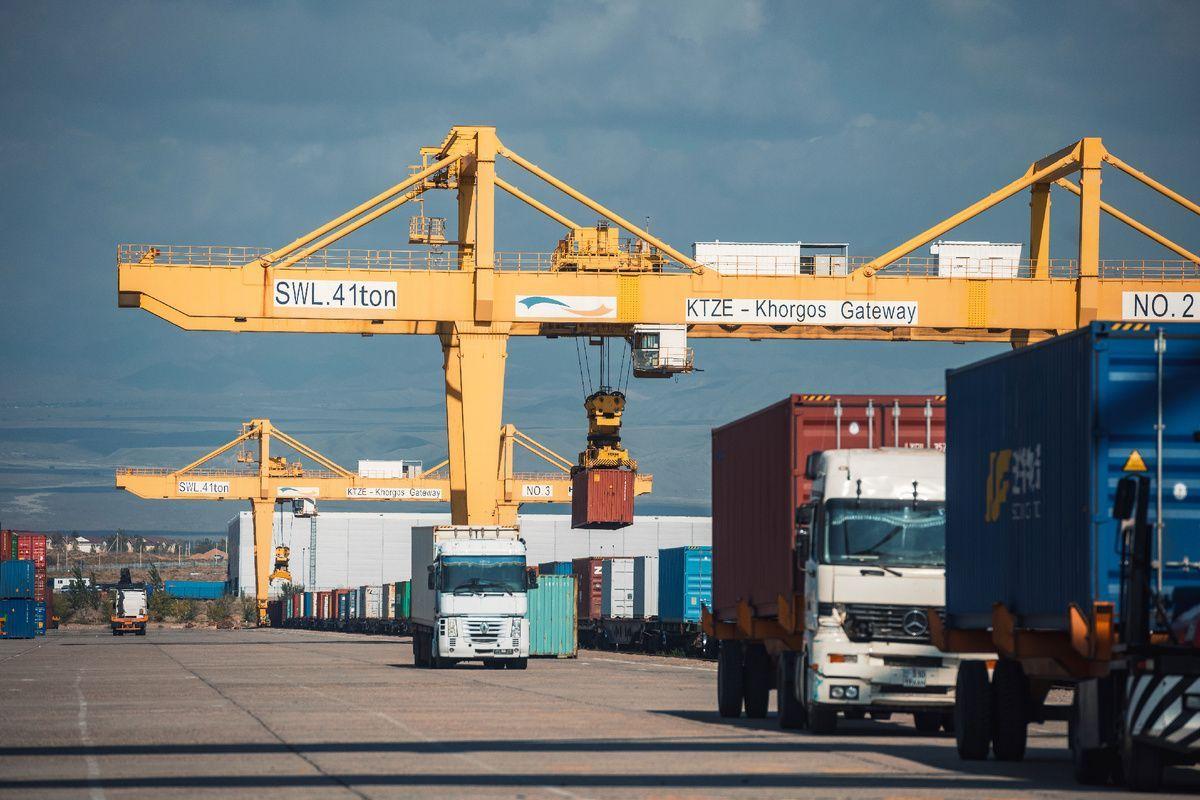
China - Kazakhstan - Uzbekistan: Countries Plan to Increase Freight Traffic via Khorgos
The China - Kazakhstan - Uzbekistan transport corridor enters a new stage of development
Kazakhstan and Uzbekistan plan to increase freight volumes along the China – Kazakhstan – Uzbekistan route and improve the efficiency of logistics infrastructure at the Kazakhstan-China border.
In August 2026, representatives of the transport authorities of Kazakhstan and Uzbekistan visited several key facilities along the international transport corridor in the Khorgos area, including Altynkol railway station, KTZE-Khorgos Gateway dry port, logistics terminals and the Khorgos – Eastern Gate Special Economic Zone.
One of the main topics of the discussions was increasing freight traffic from China through Kazakhstan to Uzbekistan and other Central Asian markets.
Kazakhstan is strengthening its role as a regional logistics hub
Kazakhstan’s geographical position allows the country to perform several important functions within the Eurasian trade and logistics system.
A significant volume of Chinese cargo passes through Kazakhstan on its way to:
- Central Asian countries;- Russia and Belarus;
- Europe;
- the Caucasus;
- Türkiye;
- the Caspian region and further along the Trans-Caspian International Transport Route.
At the same time, the China – Kazakhstan – Uzbekistan route is increasingly developing into a strategically important transport corridor in its own right.
Economic growth in Uzbekistan, rising imports from China and expanding regional trade are creating additional demand for rail, road and multimodal transportation via Kazakhstan.
Khorgos is becoming a major cargo distribution hub
The logistics hub on the Kazakhstan-China border plays a particularly important role in the development of this route.
Altynkol railway station and Khorgos Gateway dry port handle container trains arriving from China, including cargo transshipment between the Chinese railway gauge and the wider gauge used in Kazakhstan and other CIS countries.
From an operational perspective, Khorgos has become one of the major land logistics hubs connecting China with Eurasia.
Increasing freight volumes toward Uzbekistan will help make better use of the existing infrastructure while further strengthening Kazakhstan’s transit potential.
The countries plan to increase infrastructure capacity
Increasing the number of trains alone will not be enough to support future growth.
As freight volumes rise, additional pressure is placed on the entire logistics chain - from border stations and terminals to railway crossings between Kazakhstan and Uzbekistan.
For this reason, the parties intend to focus on:
- increasing infrastructure capacity;- developing terminal facilities;
- accelerating the processing of container trains;
- improving the utilization of railcars and containers;
- digitalizing transportation documents;
- strengthening coordination between railway administrations and logistics operators.
The shorter the waiting times between different transportation systems, the more competitive the entire corridor becomes.
Why is this route important for businesses?
For importers, transportation through Kazakhstan could become one of the main logistics options for delivering Chinese goods to Uzbekistan and other Central Asian countries.
The route is particularly suitable for transporting:
- industrial equipment and components;- vehicles and automotive parts;
- electronics;
- industrial goods;
- consumer products;
- construction materials;
- raw materials;
- containerized shipments for distributors and retail chains.
The development of regular rail services also allows businesses to choose between road, rail and multimodal solutions depending on cost, delivery time and the specific characteristics of the cargo.
Kazakhstan is moving from a transit country to a regional distribution center
Historically, Kazakhstan has often been viewed primarily as part of the China-Europe transit route.
Today, this model is gradually changing.
The development of logistics facilities in Khorgos, Altynkol, Dostyk and other transport hubs is helping Kazakhstan build a more comprehensive cargo distribution system with connections to several regional markets.
As a result, containers arriving from China can be forwarded not only westward, but also to Uzbekistan, Kyrgyzstan, Turkmenistan, the Caucasus and other destinations.
This further strengthens Kazakhstan’s position as a regional logistics hub in Central Asia.
Prospects for the China – Kazakhstan – Uzbekistan corridor
If the participating countries are able to increase infrastructure capacity while reducing cargo processing times at borders and railway interchange points, the route could become one of the fastest-growing international logistics corridors in Central Asia.
For Kazakhstan’s logistics sector, this could also increase demand for integrated services, including rail transportation, road freight, multimodal logistics, transshipment, terminal handling, customs clearance and last-mile delivery.
ATP Logistics provides international road and multimodal transportation services from China and across Central Asia, supporting clients throughout the entire logistics process — from route planning and customs clearance to final delivery.